🏺 What Are the Origins of Traditional Chinese Cupping?
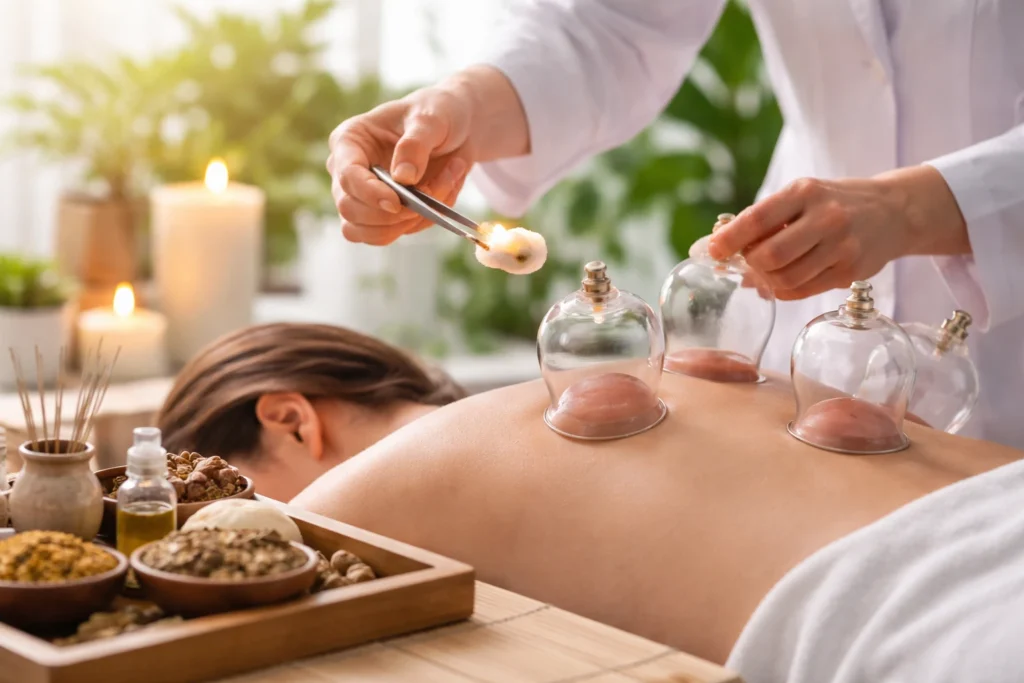
Cupping therapy dates back more than 2,000 years in Traditional Chinese Medicine (TCM). Originally practiced using animal horns, it evolved into the glass and silicone cups we use today.
In classical TCM texts, cupping is described as a method to:
- ✔️ Promote Qi and blood circulation
- ✔️ Remove external pathogens such as wind and cold
- ✔️ Clear lung meridians linked to cough and respiratory illness
In modern clinics like ours in Frederiksberg, cupping is now integrated into professional healthcare environments, including licensed sygeplejepraksis, ensuring both safety and effectiveness.
🌬️ How Does Cupping Therapy Work for Coughs and Colds?
So how exactly does cupping help when you are coughing, congested, or fighting a cold?
Cupping works by creating negative pressure on the skin, which:
- 🔹 Stimulates blood flow
- 🔹 Activates immune response
- 🔹 Loosens phlegm in the lungs
- 🔹 Reduces muscle tension in the chest and upper back
For common cold symptoms, cupping is often applied to:
- Upper back (Bladder meridian)
- Shoulder area
- Lung meridian points
Many patients report that after just one session, they experience:
- Easier breathing 😌
- Reduced chest tightness
- Less frequent coughing
📋 What Is a Typical Cupping Treatment Plan for Colds and Coughs?
At our akupunkturcenter in Frederiksberg, every patient receives a personalized treatment plan.
A standard plan usually includes:
- 🩺 Initial consultation
- 🔎 TCM diagnosis (tongue, pulse, symptom analysis)
- 🏺 Cupping session (10–15 minutes)
- 💉 Optional akupunktur for stronger effect
- 🧑⚕️ Follow-up through our sygeplejepraksis
Depending on symptom severity, most patients benefit from:
- 1–3 sessions for acute colds
- 3–6 sessions for chronic cough
⚖️ What Are the Benefits and Drawbacks of Cupping Therapy?
To help you decide, here is a clear comparison table:
| Aspect | 🌟 Benefits | ⚠️ Drawbacks |
|---|---|---|
| Effect on coughs | Relieves chest congestion naturally | Not an instant cure |
| Safety | Very safe in a professional Klinik | Temporary skin marks |
| Side effects | Minimal, non-invasive | Mild soreness |
| Compatibility | Works well with akupunktur & nursing care | Not suitable for broken skin |
| Cost | Affordable compared to medication | Not always fully refunded |
| Convenience | Quick sessions | Needs repeat visits |
🏥 Why Choose a Professional Klinik Instead of DIY Cupping?
With online stores selling cupping sets everywhere, many people consider trying cupping at home. But is that safe?
At a professional akupunkturcenter, you receive:
- ✅ Medical hygiene standards
- ✅ Proper diagnosis
- ✅ Trained therapists
- ✅ Integration with sygeplejepraksis
- ✅ Guidance on aftercare
Buying cups from a store or online may seem cheaper, but incorrect use can cause:
- ❌ Skin injury
- ❌ Infection
- ❌ Worsened symptoms
For your safety, always choose a licensed Klinik—especially when treating respiratory issues.
🌍 How Is Cupping Used in Modern Danish Healthcare Settings?
In Denmark, complementary therapies are increasingly accepted as part of integrative healthcare.
At our clinic in Frederiksberg, we often work alongside:
- General practitioners
- Physiotherapists
- Public health services
Many of our treatments are refunderet af det offentlige sundhedsvæsen through recognized schemes, making cupping accessible to more people seeking the latest holistic care methods.
Cupping does not replace medicine—but it often reduces the need for it.
Yes, when performed by trained professionals, cupping can be safely adapted for children. At our akupunkturcenter in Frederiksberg, we use gentler techniques for young patients.
Many patients notice improvement within 24 hours, especially reduced chest tightness and easier breathing.
Some treatments may be refunderet af det offentlige sundhedsvæsen depending on your insurance or health scheme. Contact our Klinik for details.
Yes, cupping can safely complement conventional medicine.